Blog
Desk Work

The Hidden Cost of Deadline Pressure at Your Desk
When stress hits, your body tightens. Your shoulders creep toward your ears. Your chest caves inward. Your head juts forward. And if you’re working from home in Milpitas—juggling back-to-back meetings, tight deadlines, and the pressure to stay productive—you’re likely doing all of this while sitting in the same chair for eight hours straight.
This combination of mental pressure and physical stillness is what we call sedentary stress, and it’s one of the most underrated threats to your spinal health and overall wellness. Unlike acute injuries, sedentary stress sneaks up on you, building tension and misalignment day after day until you wake up with chronic back pain, neck stiffness, or headaches that feel impossible to shake.
How Stress Collapses Your Posture
Your nervous system and spine are deeply connected. When you’re anxious or under pressure, your fight-or-flight response activates, and your muscles brace for action. But because you’re sitting at a desk, that protective tension has nowhere to go. Instead, it locks into your upper back, shoulders, and neck—exactly where most desk workers already struggle with gravity and screen time.
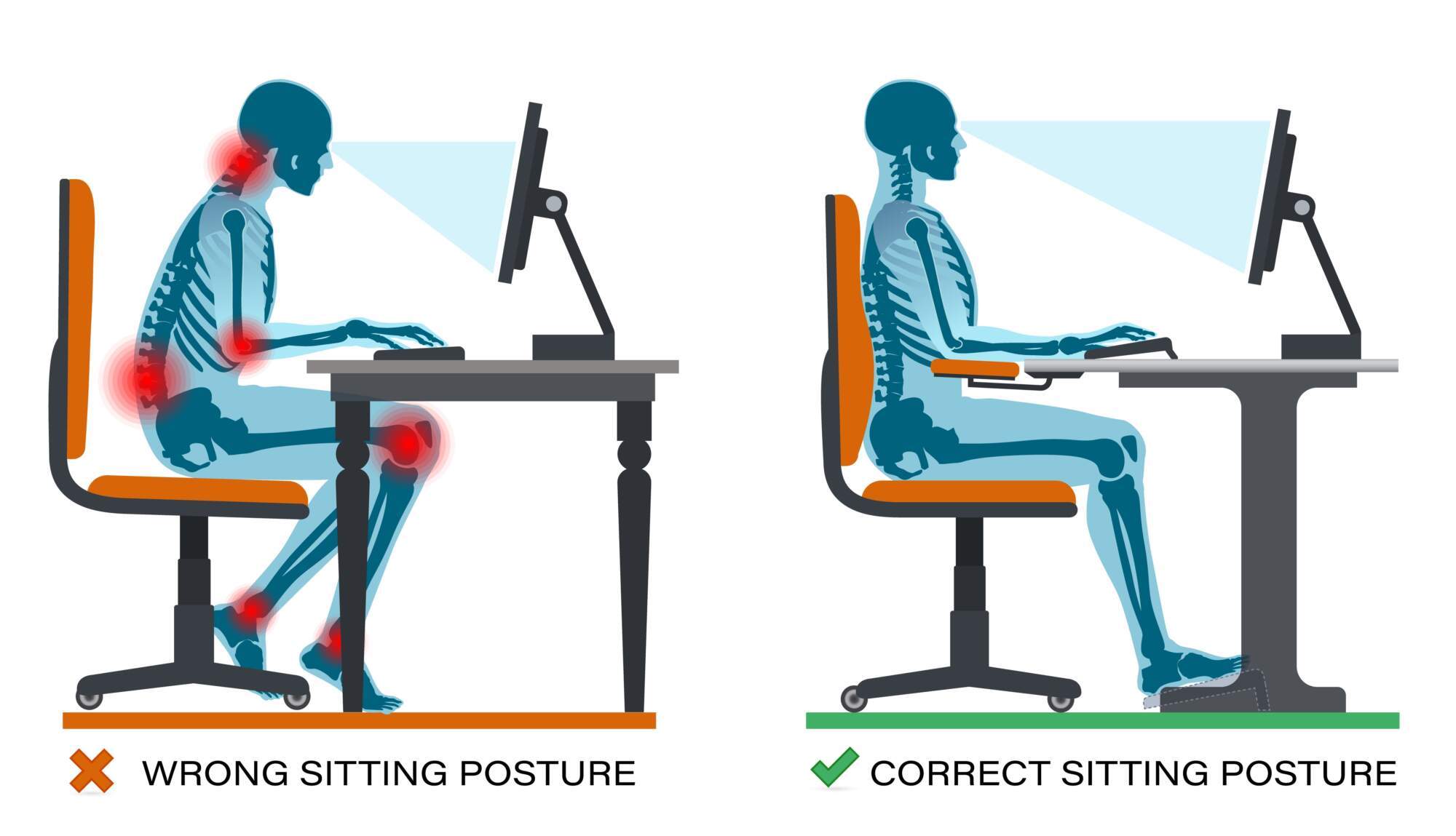
Couple this with poor desk ergonomics—a chair that’s too low, a monitor at eye level that’s too high, or a keyboard positioned too far away—and you’ve created a perfect storm. Your spine shifts out of alignment. Your discs experience uneven pressure. Your nervous system stays in a low-grade state of stress, making it harder to recover even during off-hours.
The result? Back pain, neck strain, tension headaches, and reduced mobility that makes you feel older and more worn out than you should.
Reclaim Your Desk: Ergonomics That Matter
Start with the basics. Your monitor should sit at eye level—arm’s length away, so you’re looking straight ahead, not down. Your keyboard and mouse should be close enough that your elbows stay at a 90-degree angle. Your chair should support the natural curve of your lower back, with your feet flat on the floor or a footrest.
But ergonomics alone won’t save you if you’re sitting motionless for six hours. Your spine needs movement.
Movement Breaks: The Stress-Busting Superpower
Every 30 to 45 minutes, stand up. Walk to the kitchen. Stretch your chest by clasping your hands behind your head and gently pulling your elbows back. Roll your shoulders backward 10 times. Tilt your head side to side, feeling a gentle stretch in your neck.
These aren’t just feel-good breaks—they’re essential resets for your spine and nervous system. Movement interrupts the stress cycle, increases blood flow to your muscles, and reminds your body that it’s safe to relax. Even two minutes of walking or stretching can lower cortisol levels and reduce muscle tension.
If you can, take a real lunch break away from your desk. Step outside. The combination of movement, fresh air, and a mental shift away from work pressure is remarkably healing.
If you’re already experiencing back pain, neck tension, or headaches from months of desk work and deadline stress, chiropractic care from Dr. Lind can help. Spinal adjustments restore alignment and reduce nerve interference, allowing your body to recover from the accumulated strain. Combined with ergonomic changes and movement habits, Dr. Lind addresses both the cause and the effect of sedentary stress.
You don’t have to accept chronic pain as the cost of productivity. Small changes to your workspace, intentional movement breaks, and professional support can break the cycle of stress-driven spinal decline and help you feel better in your body again.
Call (408) 263-8025 or visit our contact page.
Anxiety & Spinal Health
The Nervous System Connection You Didn’t Know About
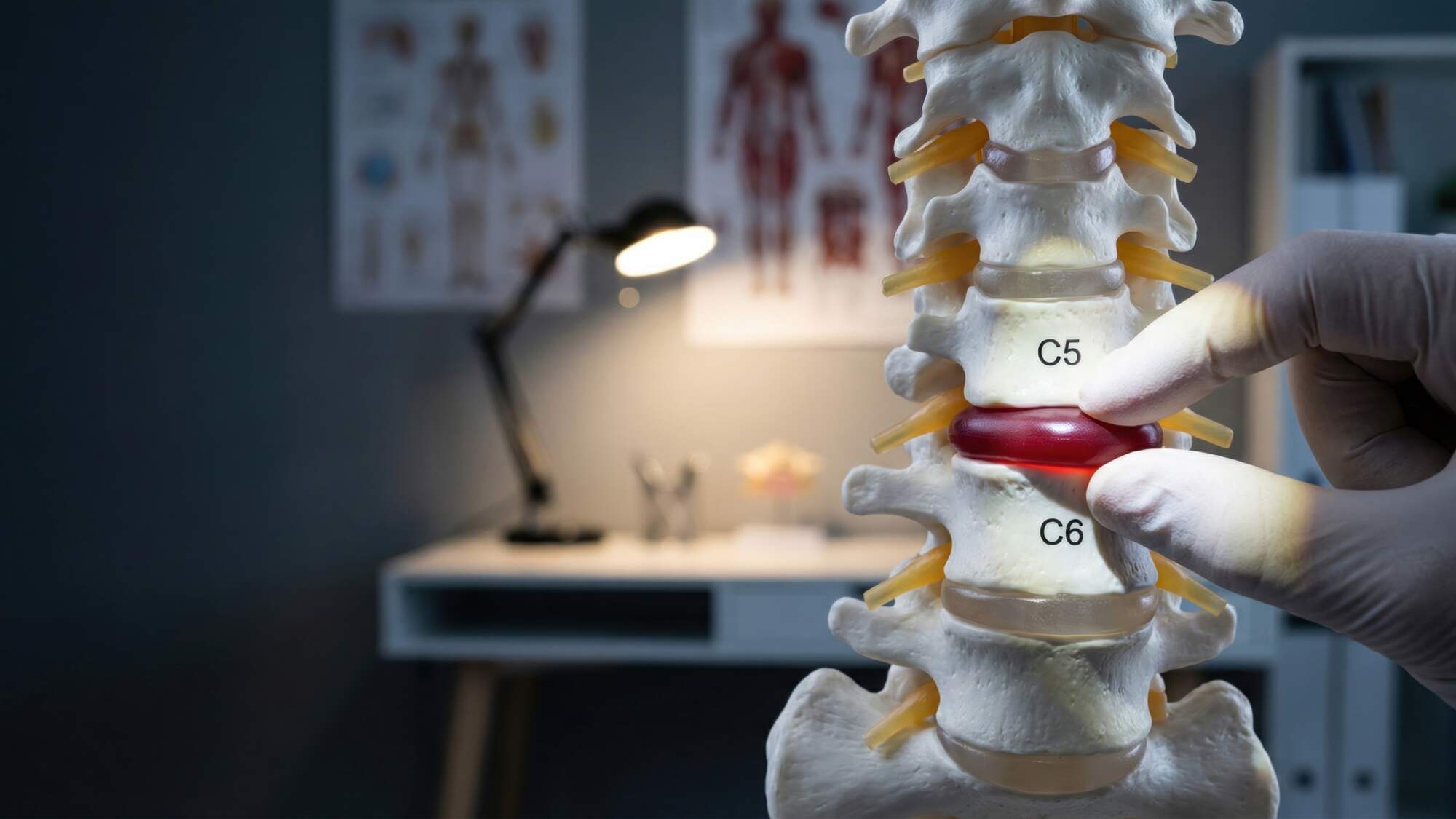
Anxiety doesn’t live only in your mind. Your nervous system is a physical network that runs through your spine, connecting your brain to every part of your body. When vertebrae become misaligned—what chiropractors call a subluxation—they can irritate or restrict the nerves passing through them. The result? Your nervous system may become overactive, amplifying your body’s stress response and making anxiety feel more intense and harder to manage.
Think of your spine as the information highway between your brain and body. When traffic flows freely, your nervous system can regulate your heart rate, breathing, and stress hormones smoothly. But when a vertebra is out of alignment, it’s like a traffic jam—signals get delayed or scrambled, and your body stays in a heightened state of alert.
The Spine-Anxiety Loop
Chronic stress and anxiety actually create a two-way problem. Stress causes muscle tension, which pulls your spine out of alignment. That misalignment then irritates your nervous system, making you feel more anxious. For busy professionals, students juggling coursework, or caregivers managing demanding schedules, this cycle can feel impossible to break.
Your nervous system has two main branches: the sympathetic (fight-or-flight) and parasympathetic (rest-and-digest). When your spine is misaligned, your sympathetic nervous system can get stuck in overdrive. You might feel constantly on edge, sleep poorly, or struggle to focus—all hallmark signs of anxiety that don’t necessarily respond well to willpower alone.
Spinal Adjustments and Nervous System Calm
Chiropractic adjustments from Dr. Lind work directly with your spine to restore proper alignment and remove nerve irritation. When vertebrae are repositioned, the pressure on nerves decreases, allowing your nervous system to reset. Research suggests that spinal manipulation can help activate the parasympathetic nervous system, signaling to your body that it’s safe to relax.
This isn’t about fixing anxiety with a single adjustment—it’s about supporting your body’s natural ability to manage stress. A properly aligned spine allows your nervous system to function more efficiently, making it easier for you to think clearly, breathe deeply, and respond to life’s pressures with more composure.
If you spend hours hunched over a laptop, cradling your phone, or sitting in a car, your posture is silently stressing your spine and nervous system. Poor posture compresses your chest, restricts your breathing, and creates a feedback loop that reinforces anxiety. Improving your alignment isn’t just about feeling better physically—it affects your mental state too.
Simple habits make a difference: keeping your screen at eye level, taking regular movement breaks, and practicing good seated posture all reduce nervous system irritation. Combined with chiropractic care, these changes create a lasting foundation for calm and clarity.
A Natural Path Forward for Stressed Professionals and Students
If you’re managing anxiety alongside a demanding career, academic pressure, or caregiving responsibilities, you deserve an approach that addresses the root cause rather than just symptoms. Chiropractic care from Dr. Lind complements other stress-management strategies like exercise, sleep, and mindfulness by ensuring your nervous system has the physical support it needs to function well.
In Milpitas, many busy professionals and students have discovered that regular chiropractic care with Dr. Lind —paired with attention to posture and lifestyle—creates meaningful shifts in how they experience stress. You don’t have to live with constant anxiety. Your spine and nervous system are ready to help you feel calmer and more in control.
Ready to explore how spinal health can support your mental clarity and resilience? Reach out to schedule your consultation, or call us at (408) 263-8025 to discuss your stress and anxiety concerns with Dr. Lind.
Phone Posture

The Hidden Cost of Smartphone Dependency
Your teenager picks up their phone before breakfast, checks it between classes, scrolls through social media at lunch, and keeps it within arm’s reach until bedtime. Sound familiar? Most teens today spend an average of 7–9 hours daily on screens—and much of that time is spent hunched forward, looking down at a device.
This habit has a name: tech neck. And it’s reshaping spines across a generation.
What Happens When Your Head Leans Forward
Your head weighs about 10–12 pounds when it’s balanced directly over your spine. But when you tilt it forward just 15 degrees to look at a phone, your neck effectively bears 27 pounds of pressure. At 45 degrees—a common texting angle—that load jumps to 49 pounds.
Repeated over months and years, this forward head posture creates several problems:
- Nerve compression: Constant forward flexion narrows the spaces between vertebrae, pinching nerves that run through the neck and upper back.
- Muscle imbalance: Chest and front neck muscles tighten while upper back muscles weaken, pulling the spine out of alignment.
- Disc stress: The intervertebral discs in the neck bear uneven pressure, increasing risk of early degeneration.
- Postural memory: Teens’ spines are still developing. Bad posture habits now can lock in misalignment for life.
The Difference Between Healthy and Harmful Phone Habits
Harmful habit: Holding the phone below eye level, chin down, shoulders rounded inward. Checking it constantly with no breaks. Texting in bed or slouched on a couch.
Healthy habit: Bringing the phone to eye level (or slightly below) so the neck stays neutral. Taking regular screen breaks—every 20–30 minutes, look away for 20 seconds. Switching hands frequently. Standing or sitting upright with shoulders relaxed back. Using a phone stand or propping it up when possible.
The second approach sounds simple, but it requires awareness and intentionality—especially for teenagers who are deeply embedded in digital culture.
The Back-to-School Period Matters
Back-to-school season marks a spike in screen time. Homework assignments shift to laptops and tablets. Online classes, research projects, and digital communication intensify. Gym class and sports season structure daily movement—and then they don’t, leaving teens more sedentary overall.
This is the perfect window to reset posture habits before tech neck becomes chronic. A spinal screening and alignment check at the start of the school year can identify forward head posture early, before it causes nerve compression, headaches, or chronic pain.
Many parents think chiropractic care is for pain—something you do after an injury or when symptoms show up. But the most effective approach is preventive. Dr. Lind can:
-
Assess your teen’s spinal alignment and posture habits.
- Identify early signs of forward head posture or subluxation (vertebral misalignment) before pain develops.
- Correct alignment through adjustments, reducing nerve compression and muscle tension.
- Teach your teen ergonomic and postural habits they’ll carry into adulthood.
- Support healthy nervous system function—critical during the teen growth years.
Regular chiropractic care from Dr. Lind during adolescence helps establish lifelong spinal health, reducing the likelihood of chronic neck and back problems down the road.
A Conversation Worth Having
Tech neck is preventable. It requires a shift in awareness—both for parents modeling healthy screen habits and for teens understanding how small postural changes now prevent big problems later. Pair these habit changes with a proactive chiropractic checkup from Dr. Lind, and you’re setting your teenager up for a spine that stays healthy through college, career, and beyond.
If your teen has already developed neck pain, headaches, or noticeable forward posture, a spinal screening can reveal what’s happening beneath the surface. Early intervention prevents long-term damage and helps teens feel better, move better, and focus better on school and life.
Call (408) 263-8025 or visit our contact page.
Joint Stiffness

That Stiff Morning Feeling Is More Common Than You Think
You wake up, swing your legs out of bed, and feel like your body needs a few extra minutes just to remember how to move. Your hips creak, your spine feels tight, and even your neck seems reluctant to turn. If you’re over 40, this morning stiffness might feel like just another part of aging—but understanding what’s actually happening can help you reclaim your mobility.
Why Does Your Body Stiffen Overnight?
When you sleep, your body enters a state of prolonged immobility. Unlike during the day when you’re constantly shifting position, stretching, and moving, sleep keeps your joints in one general posture for six to eight hours. During this time, synovial fluid—the natural lubricant in your joints—pools rather than circulates. Your muscles cool down and tighten, and if your spine is even slightly misaligned, that misalignment amplifies during rest because there’s no active movement to counterbalance it.
The nervous system also plays a role. During sleep, your nervous system is less active, and the signals that keep your muscles engaged and ready to move are dampened. When you first wake, it takes time for your nervous system to fully activate and signal your muscles to lengthen and prepare for movement.
When Stiffness Signals a Spinal Problem
Some morning stiffness is normal. It usually resolves within 15 to 30 minutes as you move around and synovial fluid redistributes. But if your stiffness lasts longer, worsens over weeks, or is accompanied by pain, numbness, or limited range of motion, it may indicate spinal misalignment or subluxation affecting your nervous system’s ability to coordinate mobility.
Misaligned vertebrae can irritate nerves and restrict the signals your nervous system sends to muscles and joints. This interference keeps your body in a guarded, protective state even after you wake. Instead of gradually loosening up, you stay locked in that tight morning posture.
Adjustments Restore Alignment and Flow
Dr. Lind addresses the root cause: spinal misalignment. When Dr.Lind performs an adjustment, he restores proper vertebral position and alignment. This relieves nerve interference, allowing your nervous system to communicate freely with your muscles and joints. Over time, regular adjustments help your spine maintain better alignment during sleep, so you wake up less stiff.
Beyond the adjustment itself, proper spinal alignment improves synovial fluid circulation and allows your muscles to relax more fully during sleep rather than staying tensioned around a misaligned spine.
Gentle Movement and Stretching Speed Recovery
Don’t rush out of bed or stay in bed trying to wait out the stiffness. Instead, begin with gentle movements before you stand: ankle circles, slow spinal twists while lying down, and gentle neck rolls. These simple motions jumpstart synovial fluid circulation and signal your nervous system to activate. Once you’re upright, light stretching and a short walk accelerate the process even more.
Combining these habits with regular chiropractic care from Dr. Lind creates a powerful routine. Your spine stays better aligned, your nervous system functions more freely, and you genuinely feel the difference when you wake up.
Take Action Today
If morning stiffness is limiting your mornings or persisting beyond 30 minutes, it’s worth investigating. A chiropractic evaluation can identify whether misalignment is contributing to your symptoms. In Milpitas, Dr. Lind can assess your spine and develop a plan to restore your mobility and help you wake up ready to move.
Call (408) 263-8025 or visit our contact page.
Subluxation and Children
Children’s Spines Develop Differently
Your child’s spine isn’t just a smaller version of yours—it’s constantly changing. Kids’ vertebrae are still mostly cartilage during the early years, gradually hardening into bone over time. This flexibility is wonderful for learning to crawl, climb, and play, but it also means their spines are sensitive to how they move, sit, and carry themselves every single day.
Between ages 2 and 8, your child’s posture habits are being locked in. Poor positioning during these formative years can set the stage for spinal stress that shows up later as pain, limited movement, or chronic problems. The good news? Early awareness and gentle chiropractic care can redirect that development toward lifelong wellness.
Subtle Signs to Watch For
Most parents don’t expect their young children to complain about back pain—and honestly, many kids won’t. Instead, look for these quieter red flags:
- Uneven shoulders or hips: Stand your child in front of you and check whether one shoulder sits higher than the other, or if their hips tilt to one side when standing. This imbalance often signals spinal misalignment.
- Favoring one side: Does your child always turn their head the same direction, crawl using one side more, or lean heavily on one leg when standing? Repetitive one-sided preference can indicate vertebral tension.
- Awkward posture during play: If your child hunches dramatically while coloring, sits in contorted positions, or seems stiff compared to peers, their spine may be out of alignment and compensating.
- Frequent complaints of leg pain or “growing pains”: While growth spurts are real, persistent discomfort in the legs or lower back sometimes reflects nerve irritation from spinal misalignment rather than normal development.
- Reduced mobility or reluctance to run: A child with spinal stress may avoid activities they once enjoyed, move less freely, or tire quickly during active play.
- Behavioral changes around movement: Increased clumsiness, difficulty with balance, or reluctance to try new physical activities can sometimes trace back to underlying spinal or nervous system tension.
Common Causes of Misalignment in Young Children
Most spinal issues in kids aren’t the result of major injury. Instead, they build gradually from everyday habits:
- Birth trauma or delivery stress (even with uncomplicated births)
- Learning to walk—lots of falls and stumbles
- Heavy backpacks or unbalanced carrying habits
- Prolonged sitting during screen time
- Playing sports without proper warm-up or technique
- Sleeping position and mattress quality
Early Checkups Are a Preventive Win
Catching spinal misalignment early isn’t about treating a crisis—it’s about building a stronger foundation for your child’s future. Dr. Lind can gently assess your child’s spinal alignment, identify subtle patterns you might miss, and use kid-friendly adjustments to keep their growing spine on track.
When you address alignment issues now, you’re reducing the likelihood of chronic pain, movement limitations, or nerve interference later. Your child develops better posture habits, moves more confidently, and gets the most out of their developing body.
Think of it the same way you approach dental checkups or vision screenings—regular spinal assessments are part of keeping your child healthy.
Many parents worry that chiropractic care for children is too intense. It’s not. Adjustments for young kids use gentle, low-force techniques tailored to their smaller bodies and developing spines. Your child might feel relieved, more mobile, or simply more comfortable after care begins.
If you’ve noticed any of these signs in your child, or if you simply want to make sure your young one’s spine is developing optimally, reach out to schedule a spinal screening. Early attention is easier, gentler, and far more effective than waiting until problems become obvious.
Call Dr. Lind at (408) 263-8025 or visit our contact page.
Teen Athletes Need Spinal Alignment for Peak Performance

The Hidden Performance Factor Your Teen Athlete Might Be Missing
Your teen is training hard—logging hours at practice, hitting the gym, and giving everything on the field or court. But what if there’s a structural barrier holding them back from their best performance? Spinal misalignment is one of the most overlooked factors affecting athletic performance, injury risk, and how quickly young bodies recover.
When your teen’s spine is properly aligned, their nervous system communicates efficiently with their muscles, joints, and balance centers. This means faster reaction times, better coordination, and more explosive power. When vertebrae shift out of alignment—something chiropractors call a subluxation—that neural communication breaks down. The result? Reduced agility, slower decision-making, and a body that’s more vulnerable to injury.
Spinal Alignment and Athletic Performance
Peak athletic performance depends on three things: strength, conditioning, and nervous system efficiency. Your teen’s coach handles the first two. Dr. Lind addresses the third.
A misaligned spine restricts your teen’s range of motion, forces compensatory movement patterns, and creates muscle imbalances. A soccer player with a shifted lumbar spine might favor one leg, increasing injury risk on the favored side. A volleyball player with thoracic misalignment loses the chest rotation needed for a powerful serve. A football lineman with cervical subluxations experiences reduced neck stability, affecting balance and tackling form.
Regular spinal adjustments restore proper alignment, which allows your teen’s body to move with intention and efficiency. This translates to better performance metrics: faster times, higher jumps, stronger throws, and improved agility.
Injury Prevention for Young Athletes
Teen athletes are especially vulnerable to overuse injuries because their bodies are still developing. Spinal misalignments accelerate wear and tear by forcing joints and muscles to work harder than necessary.
Common teen athletic injuries—ACL tears, rotator cuff strains, ankle sprains, and lower back pain—often occur because the spine and nervous system aren’t functioning optimally. When the spine is aligned, your teen’s proprioception (body awareness in space) improves, reducing fall risk and awkward-landing injuries. Balanced spinal alignment also distributes impact forces evenly across joints, rather than concentrating stress in one area.
Preventive chiropractic care from Dr. Lind is like upgrading your teen’s chassis before race day. It catches small misalignments before they cascade into major injuries.
Recovery and Training Load
Teen athletes push hard during season, and their bodies need efficient recovery to adapt and grow stronger. A misaligned spine impairs nervous system recovery, meaning your teen’s muscles can’t fully repair between practices and games.
Chiropractic adjustments from Dr. Lind optimize spinal function, which enhances parasympathetic nervous system activation—the “rest and digest” state where real recovery happens. This means your teen recovers faster, has better sleep quality, and maintains higher energy for training.
Smart coaches already recommend icing, stretching, and strength work as part of a complete training program. Spinal alignment should be part of that same toolkit.
Many teen athletes in the Milpitas area benefit from regular spinal screenings during their competitive season—typically every 3 to 4 weeks—along with adjustments as needed. This keeps misalignments from developing in the first place and addresses any that emerge from the demands of their sport.
Think of it this way: you wouldn’t send your teen to compete in worn-out shoes or with inadequate training. Why let spinal misalignment sabotage their hard work?
If your teen is serious about their sport, it’s worth scheduling a spinal screening to see whether alignment issues are limiting their potential. Your teen deserves every advantage—including a spine that supports their goals.
Call (408) 263-8025 or visit our contact page.
Fall Prevention

Falls Happen More Often in Fall and Winter
As the seasons shift and weather becomes unpredictable, slip-and-fall injuries spike dramatically among active seniors and middle-aged adults. Wet leaves, rain, ice, and changing light all play a role—but here’s what many people don’t realize: your body’s ability to catch itself, stay upright, and react quickly to a slip depends heavily on your spinal health and nervous system function.
Balance isn’t just about your inner ear or leg strength. It’s a coordinated dance between your spine, nerves, muscles, and brain. When your spine is misaligned—what chiropractors call a subluxation—that communication breaks down. Your nervous system can’t send or receive signals as effectively, which means your reaction time slows and your stability suffers.
Your Spine Controls Balance and Proprioception
Proprioception is your body’s sense of where it is in space—the reason you can walk without looking at your feet or catch yourself before you fall. This awareness comes from sensors in your joints, muscles, and ligaments that constantly communicate with your nervous system through your spinal cord.
Your cervical spine (neck) is packed with these balance sensors. Your lumbar spine (lower back) anchors your core stability. When vertebrae slip out of alignment, these sensors can’t do their job properly. You might feel slightly off-balance, move more cautiously, or find that your reflexes aren’t as sharp as they used to be—all red flags that your fall risk is climbing.
Additionally, tight muscles, poor posture, and restricted spinal mobility reduce your flexibility and agility. If your spine can’t move freely, your body can’t make the quick micro-adjustments needed to prevent a tumble on a slippery surface.
Posture and Fall Risk Go Hand in Hand
Many people don’t connect their everyday posture to their fall risk, but the link is direct. Forward head posture—common from laptops, phones, and desk work—shifts your center of gravity forward. This throws off your balance and makes your body work harder to stay upright, especially on unstable ground.
A slumped or rounded spine also weakens your core engagement. Your abdominal and back muscles can’t support your spine effectively, leaving you more vulnerable to losing your footing. Over time, this poor posture becomes your default, and your nervous system adapts to that misalignment—meaning your balance reflexes are literally trained for an off-center position.
Correcting posture now, before winter weather hits, trains your nervous system to protect you when conditions are treacherous.
A spinal screening with Dr. Lind can identify misalignments and areas of restricted mobility that compromise your balance before they become a problem. During a checkup, Dr. Lind evaluates your posture, spinal alignment, range of motion, and nervous system function—all the factors that affect fall risk.
Chiropractic adjustments from Dr. Lind restore proper alignment, which immediately improves nerve communication and proprioception. Patients often report feeling more stable and confident after just a few visits. Combined with targeted exercises and posture coaching, adjustments lay a solid foundation for staying safe and active through the fall and winter months.
This is especially important for active seniors and middle-aged adults who want to keep hiking, gardening, walking, and playing without fear of a serious fall.
Practical Steps You Can Take Right Now
- Schedule a spinal screening. A proactive checkup identifies alignment issues before they affect your balance.
- Work on posture awareness. Sit tall, shoulders back, chin level. Notice when you slouch and gently correct it throughout the day.
- Strengthen your core. Strong abs and back muscles stabilize your spine and improve balance. Dr. Lind can recommend safe exercises tailored to your needs.
- Stay flexible. Gentle stretching and mobility work keep your spine moving freely and your proprioceptors alert.
- Wear appropriate footwear. As seasons change, trade in worn shoes for ones with good traction and support.
The Bottom Line
Fall prevention isn’t just about being careful on icy sidewalks. It starts with a healthy, well-aligned spine and a nervous system firing on all cylinders. By addressing spinal health now, you’re investing in your stability, confidence, and independence for months to come. Don’t wait until after a fall to think about your spine—get ahead of it.
Call (408) 263-8025 or visit our contact page.
Tension Headaches vs. Migraines

Two Common Headaches, Two Different Origins
If you suffer from frequent headaches, you’re not alone. Millions of people reach for pain relievers without ever asking what’s triggering the pain in the first place. But tension headaches and migraines are distinctly different conditions—and understanding the difference can point you toward real relief.
A tension headache typically feels like a tight band squeezing around your head, often settling at the base of your skull or across your temples. You might feel stiffness in your neck and shoulders. These headaches come on gradually, last anywhere from 30 minutes to several hours, and while painful, they’re rarely debilitating. Tension headaches are often triggered by stress, poor posture, or muscle tightness.
A migraine, by contrast, is usually a throbbing pain on one side of the head and can last 4 to 72 hours. Migraines often come with nausea, sensitivity to light and sound, or visual disturbances (called aura). They’re more severe and can make it hard to function. While stress and hormones can trigger migraines, the underlying mechanism involves changes in blood flow and nerve activity in the brain.
Your Cervical Spine and Headache Connection
Here’s what many headache sufferers don’t realize: your neck’s alignment and health directly affect both types of headaches. The cervical spine—your neck—houses delicate nerves and blood vessels that influence pain signals, muscle tension, and blood flow to your head.
When vertebrae in your neck become misaligned (a condition chiropractors call a subluxation), they can compress nerves or trigger muscle tightness that radiates upward. This compression restricts nerve function and blood flow, which aggravates both tension headaches and migraines. Many people with chronic headaches also have poor posture from desk work, phone use, or old injuries—all of which pull the cervical spine out of alignment and perpetuate the cycle.
The good news? A misaligned spine is fixable. When your cervical vertebrae are properly aligned, nerve pressure decreases, muscles relax, and blood flow normalizes. This addresses the root cause rather than just masking the symptom.
Over-the-counter or prescription pain medications can feel like a quick fix, but they don’t resolve the underlying spinal or muscular problem. You take a pill, the headache fades, and two weeks later you’re reaching for another one. The pattern repeats because the misalignment is still there, still compressing nerves, still triggering tension.
A drug-free approach targets what’s actually causing your pain. Dr. Lind focuses on restoring proper cervical alignment, releasing trapped nerves, and breaking the cycle of recurring headaches.
How Dr. Lind Addresses Headaches
During an evaluation, your Dr. Lind will assess your cervical spine’s alignment and mobility. If misalignment or nerve compression is contributing to your headaches, a series of adjustments can gradually restore proper positioning. As alignment improves, muscle tension eases, nerve pressure decreases, and headaches often become less frequent and less intense.
Beyond adjustments, Dr. Lind may recommend ergonomic changes (especially if you work at a desk), stretches to release neck tension, and lifestyle modifications that support your spine’s health. Many patients benefit from complementary massage therapy to relax tense muscles in the neck and shoulders.
For patients in Milpitas and the surrounding area dealing with chronic tension headaches or migraines, this integrated approach offers lasting relief without relying on recurring medication.
If headaches have become part of your routine, your cervical spine may be part of the story. A professional spinal screening can reveal whether misalignment or nerve compression is playing a role. Many patients are surprised to learn how much relief is possible when the root cause is addressed—and how that relief comes without medication or invasive treatment.
Call (408) 263-8025 or visit our contact page.
Screen Time and Neck Pain

The Back-to-School Screen Time Surge
As fall arrives and kids settle into new routines, so does a familiar sight: hunched shoulders over tablets, laptops tilted at awkward angles, and heads jutting forward during online lessons. Screen time for school-age children has skyrocketed in recent years, and the physical toll on growing spines is real. If you’ve noticed your child complaining of neck stiffness, rubbing the back of their head, or slouching more than usual, it’s time to pay attention. Their spine is growing, developing, and forming habits that can last a lifetime.
Understanding Tech Neck in Kids
“Tech neck” happens when the head leans forward to view a screen, shifting the weight of the skull out of alignment with the spine. For adults, this is uncomfortable. For children whose spines are still developing, it’s potentially more concerning. A child’s spine is more flexible and moldable than an adult’s—which is wonderful for growth, but it also means poor posture habits can become hardwired faster. When a child spends hours daily with their head bent forward, the muscles in the neck and upper back work overtime to support that weight, leading to strain, tension, and sometimes pain.
The problem worsens during the school day: sit-down classroom time, plus homework on a computer or tablet, plus recreational screen use adds up quickly. Many children are now logging 6–8+ hours of screen time daily, often with minimal breaks or posture correction.
Red Flags Parents Should Watch For
Not every child will complain about pain right away—some adapt silently, and discomfort can creep up gradually. Keep an eye out for these warning signs:
- Neck stiffness or reluctance to turn their head—especially noticeable in the morning or after homework sessions
- Frequent headaches—often linked to neck tension and muscle tightness
- Slouching or forward head posture—even when not at a screen
- Complaints of shoulder or upper back soreness
- Loss of range of motion—if your child can’t easily look over their shoulder or tilt their head side to side
- Rubbing the back of the neck or head frequently—a sign they’re self-soothing discomfort
If you’re noticing any of these signs, don’t wait for the pain to worsen. Early intervention makes a real difference.
The good news: you can help your child protect their spine during these critical growth years. Start by adjusting the setup. The screen should be at eye level when your child sits upright, not angled downward. Their feet should rest flat on the floor or a footrest, and elbows bent at roughly 90 degrees. Encourage regular breaks—the 20-20-20 rule is helpful: every 20 minutes, look at something 20 feet away for 20 seconds. This gives neck muscles a chance to relax.
At home, model good posture yourself. Kids learn by watching, and when they see you sitting upright at your own laptop, it normalizes healthy habits.
Chiropractic Care Supports Spinal Development
Regular chiropractic checkups with Dr. Lind during childhood can catch postural problems and spinal misalignments before they become chronic. Dr. Lind is trained in pediatric care and can assess your child’s spine, identify areas of tension or restriction, and help restore proper alignment. Adjustments for children are gentle, age-appropriate, and designed to support natural spinal development rather than force change. When the spine is properly aligned and the nervous system is functioning well, your child has a better foundation for growth, better mobility, and reduced risk of pain patterns taking root.
Beyond adjustments, Dr. Lind can offer practical guidance on posture, screen habits, and exercises that strengthen the muscles supporting the spine. Addressing these issues now—during the school years when habits are forming—sets your child up for a lifetime of better spinal health.
As your family adjusts to the back-to-school rhythm, take a moment to evaluate your child’s tech habits and posture. Small changes and preventive care today can spare them from chronic neck and back problems down the road. If you’ve noticed any of those red flags, or simply want to ensure your child’s spine is developing healthily, a spinal screening is a great starting point.
Call (408) 263-8025 or visit our contact page.
Breathing Better

The Link Between Your Posture and Your Breath
If you’ve noticed yourself feeling unusually tired by mid-afternoon, or if you catch yourself taking shallow breaths while hunched over your desk, you’re not alone. Office workers and busy parents often chalk up fatigue to long days and stress—but the real culprit might be hiding in plain sight: your posture.
Your spine and your lungs are intimately connected. When your spinal alignment shifts—especially into the forward head posture and rounded shoulders so common in desk work—your ribcage compresses, your diaphragm can’t fully expand, and your oxygen intake drops. Over time, shallow breathing becomes your default, depriving your body and brain of the oxygen they need to function optimally.
Slouching Compresses Your Breathing
Think of your ribcage as a cage protecting your heart and lungs. When you slouch, that cage collapses inward. Your shoulders round forward, your chest caves in, and the muscles responsible for deep breathing—especially your diaphragm—lose their range of motion.
The diaphragm is a dome-shaped muscle beneath your lungs that does about 75% of the work of breathing. When you’re upright with proper spinal alignment, your diaphragm can contract and expand freely, pulling air deep into your lungs. But when you’re slumped, the diaphragm is cramped and restricted, forcing you to rely on shallow, chest-based breathing instead. This rapid, shallow breathing activates your sympathetic nervous system—the “fight or flight” response—which increases tension, anxiety, and fatigue.
The Nervous System Connection
Your spine houses your central nervous system, which controls everything from your heart rate to your breathing pattern. Vertebral misalignments (called subluxations) can interfere with nerve function, disrupting the signals between your brain and the muscles involved in respiration. When your spine is properly aligned, your nervous system communicates more effectively, allowing your breathing to be deeper, more rhythmic, and more efficient.
Better oxygen delivery means better energy, clearer thinking, and a more balanced nervous system response. That afternoon slump you’ve been fighting? Part of it may simply be that your body isn’t getting enough oxygen because your posture won’t let it.
Simple Ergonomic Fixes You Can Start Today
If you spend hours at a computer or desk, small changes can make a real difference:
- Monitor height: Position your screen at eye level so you’re not looking down or straining forward.
- Seat support: Use a chair that supports the natural curve of your lower back. Your feet should rest flat on the floor.
- Desk distance: Keep your keyboard and mouse close enough that your elbows bend at roughly 90 degrees.
- Movement breaks: Stand and stretch every 30–45 minutes. Roll your shoulders back, open your chest, and take three to five deep breaths.
Ergonomic adjustments help, but they’re only part of the picture. If your spine has developed postural patterns over months or years, you may need professional help to restore proper alignment and mobility. Dr. Lind can identify vertebral misalignments, assess your spinal curve, and use targeted adjustments to restore function. When your spine is aligned, your ribcage opens, your diaphragm works efficiently, and your nervous system functions optimally.
If shallow breathing, afternoon fatigue, or that persistent tension in your chest and shoulders sound familiar, your posture and spine alignment may be the overlooked piece of the puzzle. A spinal evaluation from Dr. Lind can reveal whether misalignments are restricting your breathing and energy levels. The good news is that with attention to posture, ergonomics, and chiropractic adjustments, you can restore your lung capacity and feel more energized throughout your day.
Call (408) 263-8025 or visit our contact page.