The Office Chair Trap
Sitting All Day Doesn’t Have to Hurt
If you work in tech—or any desk-heavy role here in Milpitas—you’re spending roughly eight hours a day in a chair. That’s 40 hours a week, 2,000 hours a year, all spent in a posture that your spine was never designed to maintain. And if that chair isn’t set up correctly, those hours are compounding spinal stress with every passing day.
The trouble isn’t sitting itself. The trouble is how we sit, for how long, without interruption. Poor office ergonomics don’t cause pain overnight—they sneak up on you the same way disc injuries do. Small misalignments accumulate, muscles tighten, and one day you notice your neck is stiff, your lower back aches, or your shoulders feel permanently locked. By then, weeks or months of poor positioning have already done their work.
The Three Pillars of Office Ergonomics
Monitor Height and Distance
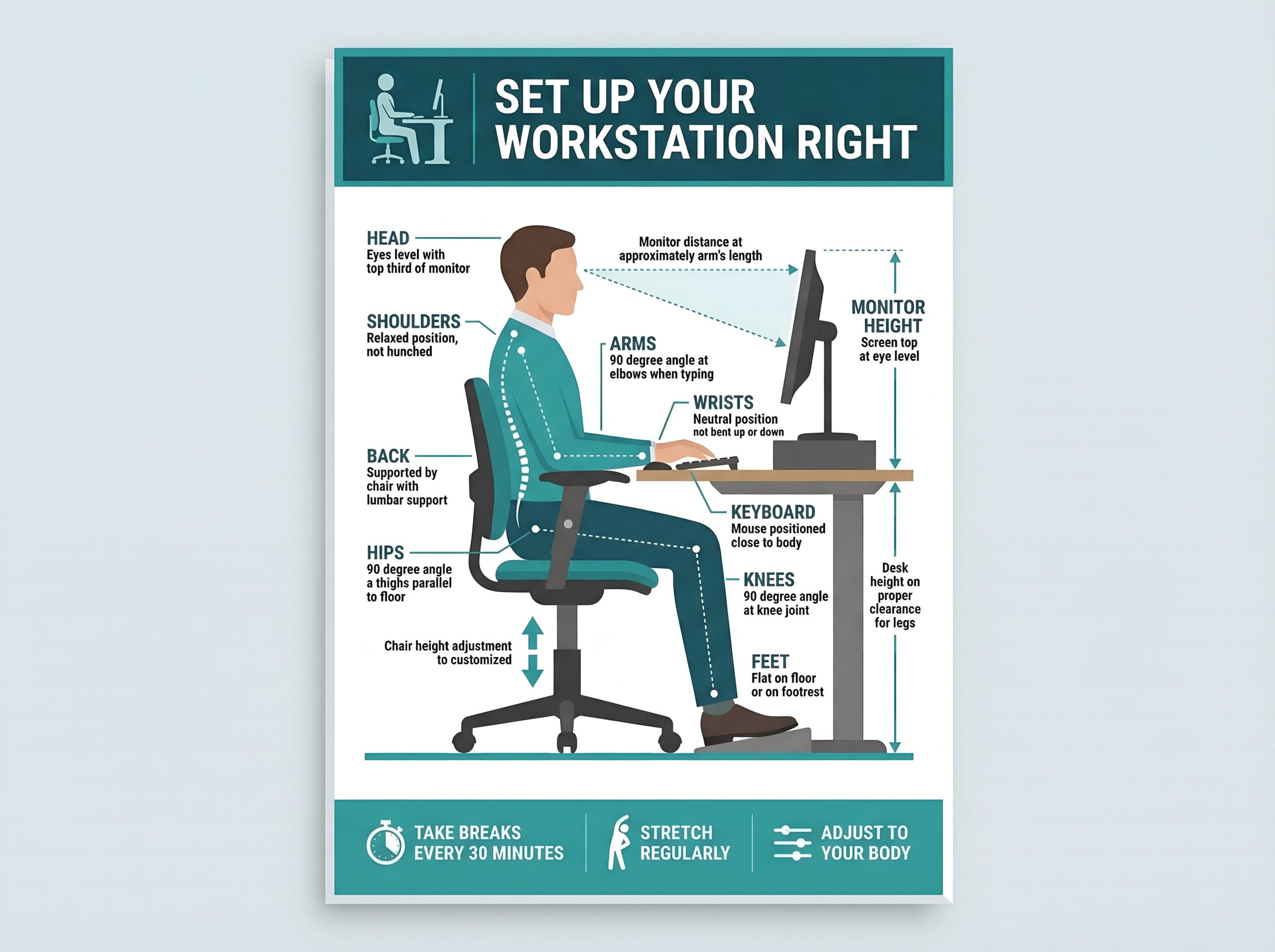
Your monitor should sit at or slightly below eye level, about 20 to 28 inches from your face. When your screen is too low, you crane your neck downward for hours, straining the cervical spine and upper back. Too high, and you tilt your head backward, which shifts the load onto your neck and shoulders. If you’re using a laptop, invest in a separate monitor and keyboard—your neck will thank you. (We’ve covered laptop ergonomics before; the same principles apply here.)
Desk and Chair Height
Your elbows should rest at roughly a 90-degree angle when your hands are on the keyboard. Your desk should be high enough that your wrists stay neutral—not bent upward or downward. Your chair should support the natural curve of your lower spine; if it doesn’t, a small lumbar pillow can make a huge difference. Your feet should rest flat on the floor or a footrest, with your knees at about 90 degrees. These adjustments take five minutes but prevent hours of compensatory strain.
Keyboard and Mouse Placement
Keep both within easy reach and at the same height as your desk surface. When your keyboard is too far away or your mouse requires you to reach, your shoulders roll forward and your upper back rounds. This posture, repeated daily, trains your body into what we call upper crossed syndrome—a pattern of tightness and weakness that feeds chronic neck and shoulder pain.
Movement Is Medicine
Even a perfect desk setup can’t fix one problem: sitting still for eight hours. Your spine is designed to move. Your discs exchange fluid and nutrients through motion. Your nervous system stays alert and balanced through varied posture and activity.
Set a timer for every 30 minutes. Stand up. Walk to refill your water. Do a few gentle neck rolls or shoulder shrugs. Stretch your hip flexors—they get tight from sitting and can pull your pelvis out of alignment. These aren’t optional add-ons; they’re maintenance. Even five minutes of movement per hour can interrupt the pattern that leads to pain.
Think of your spine the way you’d think of your car. Regular oil changes prevent engine damage. Regular chiropractic adjustments prevent spinal misalignment from accumulating into injury.
If you’re spending 40 hours a week in an office chair, your spine is under constant low-level stress. Adjustments keep your vertebrae aligned, your nervous system clear, and your muscles balanced. This isn’t about pain relief alone—it’s about catching small misalignments before they become big problems. For desk workers, preventive adjustments are far more cost-effective than waiting until you’re injured and need intensive care.
If you work in tech and you’re noticing neck stiffness, lower back tension, or headaches by day’s end, your office setup and daily movement habits are worth examining. And if you’ve already got pain, the sooner you address the underlying spinal alignment, the faster you’ll recover.
Your spine supports everything you do—your work, your family, your quality of life. Desk work doesn’t have to damage it, but it requires intentional choices: better ergonomics, movement breaks, and regular chiropractic care to keep you aligned and feeling your best.
Ready to talk? Call (408) 263-8025 or visit our contact page.