The Commute Crunch: How Your Drive to Work Affects Your Spine
Your Car Is a Mini Office—And It May Be Hurting Your Back
If you’re commuting in the Bay Area, you’re probably spending a solid chunk of your day in your car. For many Milpitas professionals, that’s anywhere from 30 minutes to over an hour each way. Your commute might feel routine, but your spine is sending a very different message: repetitive strain, misalignment, and cumulative stress that builds up mile after mile.
Unlike your office chair, your car seat wasn’t designed with spinal health as the priority. The steering wheel position, seat height, and overall cabin ergonomics create a perfect storm for neck strain, lower back pain, and shoulder tension—especially over time.
Why Car Seats Are Spinal Trouble
Most car seats recline at an angle that encourages slouching. Your head drifts forward to see the road, your shoulders round inward, and your lower back flattens against the seat. This posture—repeated daily—creates what we call postural stress. Your neck muscles work overtime to hold your head up, while your lower back supports weight without proper support.
Add in the vibration of the road, sudden braking, and the tension of navigating traffic, and your spine experiences both static compression and dynamic shock. Over weeks and months, these forces accumulate, leading to:
- Neck pain and stiffness from forward head posture
- Lower back pain from poor lumbar support
- Shoulder tension from gripping the steering wheel
- Headaches triggered by neck strain radiating upward
Optimize Your Driving Position
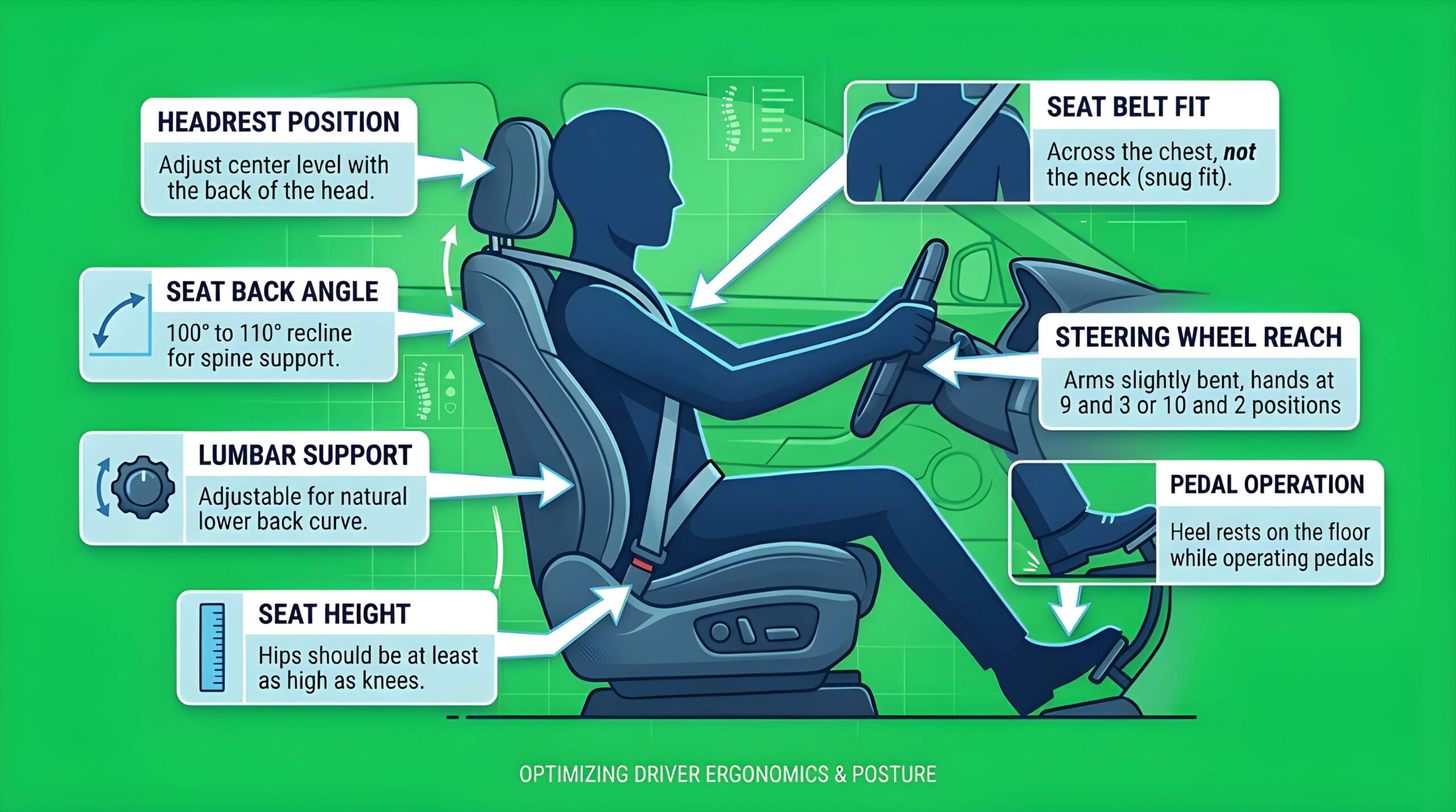
You can’t avoid your commute, but you can change how you sit in it. Here are practical adjustments:
- Seat height: Your hips should be slightly higher than your knees, allowing your thighs to sit parallel to the ground. This supports your lower back.
- Steering wheel distance: Adjust so your elbows have a slight bend when your hands rest at 9 and 3. Avoid reaching or pulling your shoulders forward.
- Lumbar support: Use a rolled towel or aftermarket lumbar pillow to fill the gap between your lower back and the seat. This maintains your spine’s natural curve.
- Headrest position: The headrest should support the center of your head, not just your neck. Adjust so it’s level with the top of your ears.
- Mirror angles: Position mirrors so you can glance without twisting your neck excessively.
Break the Cycle—Movement Matters
Static positions are the enemy of spinal health. On longer commutes, take exit breaks to stretch—even five minutes of walking and gentle neck rotations can reset muscle tension. When you’re stuck in traffic, roll your shoulders backward, gently rotate your head, and shift your weight side to side. These small movements interrupt the repetitive strain cycle.
Why Commuters Need Chiropractic Maintenance
Your commute is a daily habit, which means the strain is consistent and cumulative. Unlike a one-time injury, commute-related pain sneaks up gradually—and by the time you notice it, spinal misalignments may have already developed.
Regular chiropractic check-ups act as preventive maintenance for your spine, much like oil changes for your car. Adjustments realign your vertebrae, reduce nerve irritation, and restore mobility before pain becomes chronic. For professionals in Milpitas with regular commutes, ongoing care helps you stay pain-free and maintain the posture and flexibility your job demands.
Start Here
If your commute is leaving you sore, tight, or headachy, your spine is telling you something needs to change. Small ergonomic tweaks help, but professional assessment ensures no underlying misalignments are quietly worsening. Contact us to schedule a consultation, or call (408)-263-8025 to discuss how we can help keep your spine healthy through the long commute season.