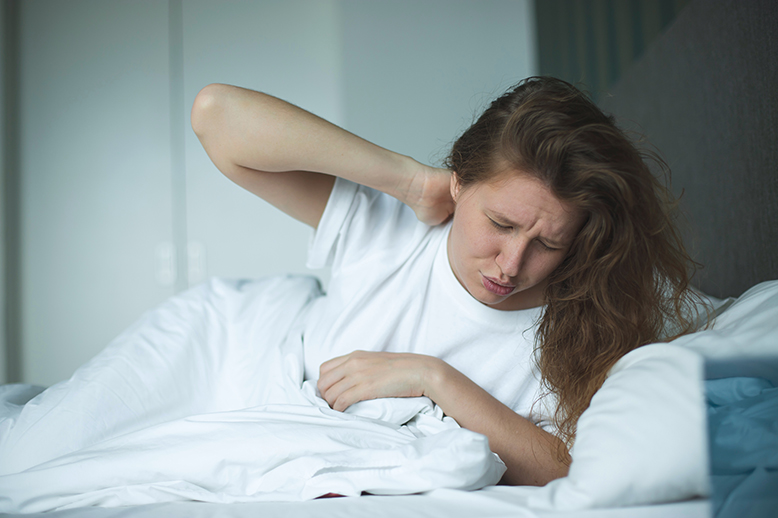
Prolonged Rest Can Make Pain Worse
Here’s Why
“I’ve been trying not to move it.”
That’s something we hear often from patients dealing with neck or back pain. They avoid turning their head. They sit carefully. They limit bending and twisting because movement feels like it might make things worse.
It seems logical. If something hurts, protect it. But in many cases, prolonged rest can actually prolong the problem.
The body is built for motion. Muscles, joints, discs, and nerves all depend on regular movement to stay healthy. When activity decreases, muscles tighten and weaken. Joints become stiff. Circulation slows. The nervous system can become more sensitive, interpreting normal movement as a threat instead of something safe.
Spinal discs rely especially on motion. They do not have a strong direct blood supply. Instead, they receive nutrients through changes in pressure that occur when you move. When movement is limited for too long, that natural exchange decreases. Stiffness increases, and recovery can take longer.
This doesn’t mean ignoring sharp pain or pushing through a significant injury. Short-term rest after an acute flare-up can be appropriate. But extended inactivity often creates secondary issues — reduced mobility, muscle imbalance, and decreased stability. Over time, the body becomes less resilient.
Pain may improve temporarily with rest, but the underlying mechanical stress often remains.
True recovery focuses on restoring healthy movement patterns. That includes improving joint mobility, reducing nerve irritation, and strengthening the muscles that support the spine. When movement improves, circulation improves. When circulation improves, tissues heal more efficiently.
Dr. Lind addresses the mechanical factors contributing to restricted motion. By improving joint function and supporting better biomechanics, the body is better able to move without irritation.
Rest has its place. But movement is often the missing piece.
If your neck or back pain has lingered despite “taking it easy,” it may be time to focus on restoring function rather than continuing to avoid activity.
Pain doesn’t always mean stop. Often, it means move better.
Click here to contact Dr. Lind or call (408) 263-8025